Artificial Intelligence (AI) is no longer a futuristic concept—it’s part of our everyday lives. From personalized content recommendations to innovative learning tools, AI influences how we think, work, and interact. But as AI becomes more powerful and accessible, a critical question arises:
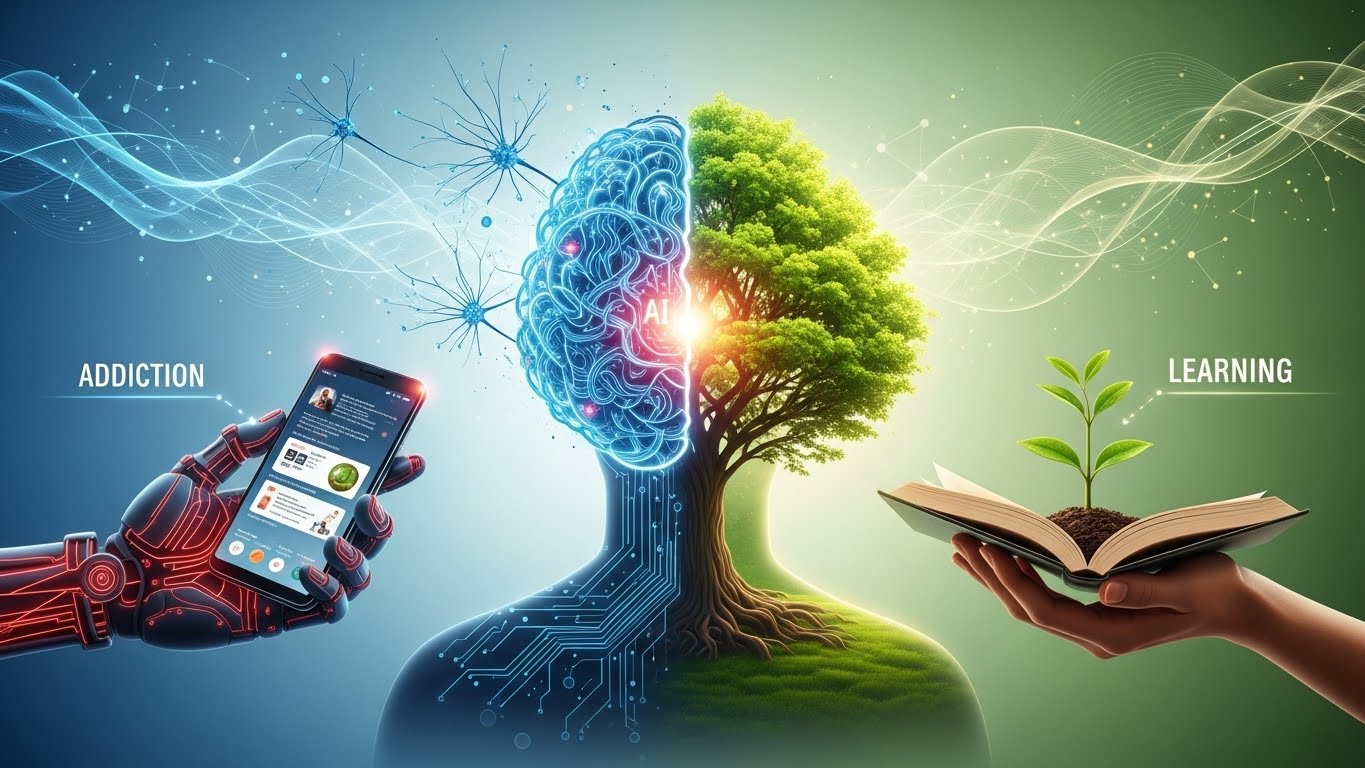
Is Artificial Intelligence encouraging learning, or is it slowly creating addiction?
The truth lies somewhere in between. AI can be an incredible learning companion, yet it can also become a source of dependency if used without awareness. Let’s explore both sides from a human-centered perspective.
How Artificial Intelligence Supports Learning
When used with intention, AI can significantly improve how we learn and grow.
Key Learning Benefits of AI
In this sense, AI acts as a support system, empowering humans rather than replacing them.
When Artificial Intelligence Becomes Addictive
Problems begin when AI usage shifts from purposeful to passive.
How AI Can Lead to Addiction
When AI controls our time and attention, learning turns into habitual consumption.
Pros and Cons of Artificial Intelligence
Pros of Artificial Intelligence
Cons of Artificial Intelligence
AI Addiction vs AI Learning: The Human Difference
| AI for Learning | AI as Addiction |
| Goal-oriented use | Mindless scrolling |
| Builds skills | Weakens thinking |
| Time-managed | Time-consuming |
| Supports creativity | Reduces focus |
| Human in control | AI in control |
The difference is not AI itself, but how humans choose to use it.
How to Use AI Responsibly
To maintain a healthy balance:
Frequently Asked Questions (FAQs)
1. Can Artificial Intelligence really improve learning?
Yes. When used properly, AI personalizes learning, simplifies complex topics, and helps learners progress faster.
2. Is AI addiction a real problem?
Yes. Excessive dependence on AI-driven platforms can lead to reduced focus, motivation, and critical thinking.
3. How can I avoid becoming addicted to AI tools?
Use AI with clear goals, limit screen time, and think actively rather than blindly accept outputs.
4. Is AI replacing human intelligence?
No. AI complements human intelligence but lacks emotions, ethics, and real-world judgment.
5. Is AI more harmful or beneficial for society?
AI is beneficial mainly when used responsibly; harm arises from misuse, lack of regulation, or overdependence.
Conclusion
Artificial Intelligence is neither inherently addictive nor purely educational—it is a neutral tool shaped by human behavior. When used consciously, AI becomes a powerful learning partner. When used carelessly, it risks becoming a silent addiction.
The future of AI is not about choosing between learning and addiction—it’s about choosing awareness, balance, and responsibility.
AI should serve human intelligence, not control it.