
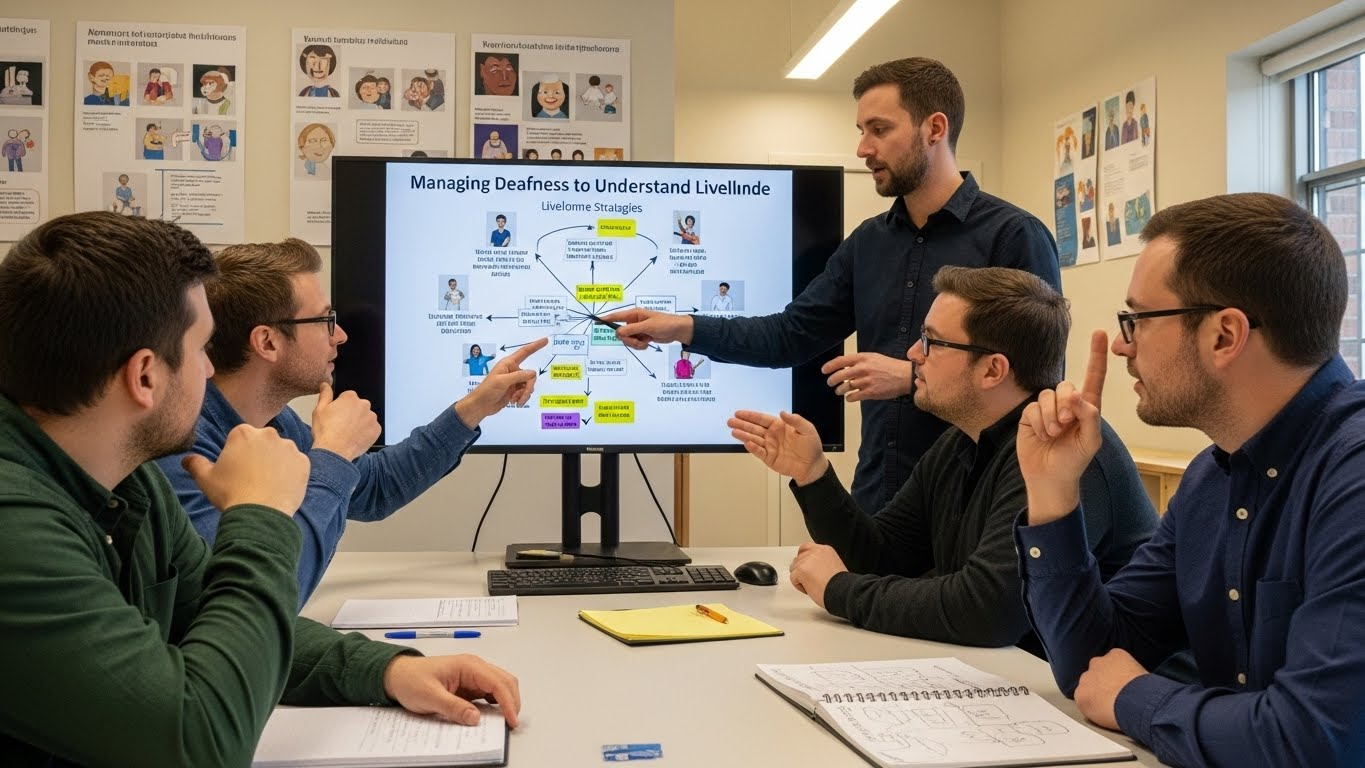
Deafness is not just a health condition—it is a social and economic challenge that affects millions worldwide. Understanding how deafness impacts livelihood is essential for building inclusive societies where everyone has equal opportunities to thrive. This blog explores the causes of deafness, its implications on employment, and practical strategies to manage it for a sustainable livelihood.
What is Deafness?
Deafness refers to partial or complete hearing loss that can occur at birth or develop later due to illness, injury, or ageing. According to the World Health Organization (WHO), over 430 million people globally experience disabling hearing loss, and this number is expected to rise to 700 million by 2050.
Common Causes
* Genetic factors: Inherited conditions affecting auditory function.
* Environmental factors: Exposure to loud noise, infections, or ototoxic drugs.
* Age-related hearing loss: Common in older adults.
While medical interventions such as hearing aids and cochlear implants help, deafness often persists as a communication barrier, affecting education and employment opportunities.
Impact on Livelihood
Livelihood refers to the means of securing life’s necessities—income, food, shelter, and social well-being. For individuals with hearing impairment, livelihood challenges arise due to:
* Limited access to education: Communication barriers often lead to lower literacy rates.
* Employment discrimination: Many employers hesitate to hire deaf individuals due to misconceptions about productivity.
* Restricted job options: Jobs requiring verbal communication or auditory skills become inaccessible.
* Social isolation. Lack of inclusion affects networking and career growth.
According to the International Labour Organization (ILO), unemployment rates among people with disabilities, including deaf individuals, are twice as high as the general population.
Strategies for Managing Deafness
Managing deafness to ensure livelihood involves a combination of medical, social, and technological interventions:
1. Early Diagnosis and Treatment
* Regular hearing screenings, especially for children, can prevent long-term communication issues.
* Access to affordable hearing aids and implants is crucial.
2. Education and Skill Development
* Inclusive education systems with sign language interpreters and captioning tools.
* Vocational training programs tailored for deaf individuals to enhance employability.
3. Workplace Inclusion
* Employers should adopt policies promoting diversity and accessibility.
* Use of assistive technologies like speech-to-text software and video relay services.
* Training staff in basic sign language to improve communication.
4. Government and NGO Support
* Subsidies for hearing devices and rehabilitation programs.
* Job placement initiatives and entrepreneurship support for the deaf community.
5. Community Awareness
* Public campaigns to reduce stigma and promote understanding.
* Encouraging businesses to create deaf-friendly environments.
Role of Technology
Technology plays a transformative role in bridging communication gaps:
* Mobile apps for sign language translation.
* Real-time captioning tools for meetings and conferences.
* Online learning platforms with accessibility features
These innovations empower deaf individuals to participate fully in education and employment.
Real-World Example
Companies like Starbucks have introduced “Signing Stores” where employees communicate in sign language, creating an inclusive environment for deaf customers and staff. Similarly, tech giants like Microsoft and Google have integrated accessibility features in their products, enabling better communication for people with hearing impairments.
1. What causes deafness?
Deafness can result from genetics, infections, loud noise exposure, ageing, or certain medications. Early detection and treatment help prevent severe hearing loss.
2. How does deafness affect employment opportunities?
Hearing impairment often leads to communication barriers, limited job options, and discrimination, resulting in higher unemployment rates compared to the general population.
3. What rights do deaf individuals have in the workplace?
Laws like the ADA require employers to provide reasonable accommodations—such as interpreters, captioning, and assistive devices—to ensure equal opportunities.
4. What are examples of reasonable workplace accommodations for deaf employees?
Sign language interpreters, real-time captioning, video relay services, and hearing aid-compatible devices are key tools for inclusion.
5. How can technology help manage deafness in daily life and work?
AI-powered transcription apps, Bluetooth hearing aids, captioning tools, and visual alert systems bridge communication gaps and improve independence.
Conclusion
Managing deafness is not just about medical treatment—it is about creating an inclusive ecosystem where individuals with hearing impairment can lead dignified lives. Governments, employers, educators, and communities must work together to remove barriers and provide equal opportunities. By embracing technology, promoting awareness, and implementing inclusive policies, we can ensure that deafness does not limit livelihood.